A daily, year-round shuttle from Nuwara Eliya into one of Sri Lanka's two cloud forests. The case that it breaks even at ~10% seat occupancy, cuts emissions inside the park from launch, and routes 5% of net ticket revenue back into the surrounding villages and ecosystem restoration.
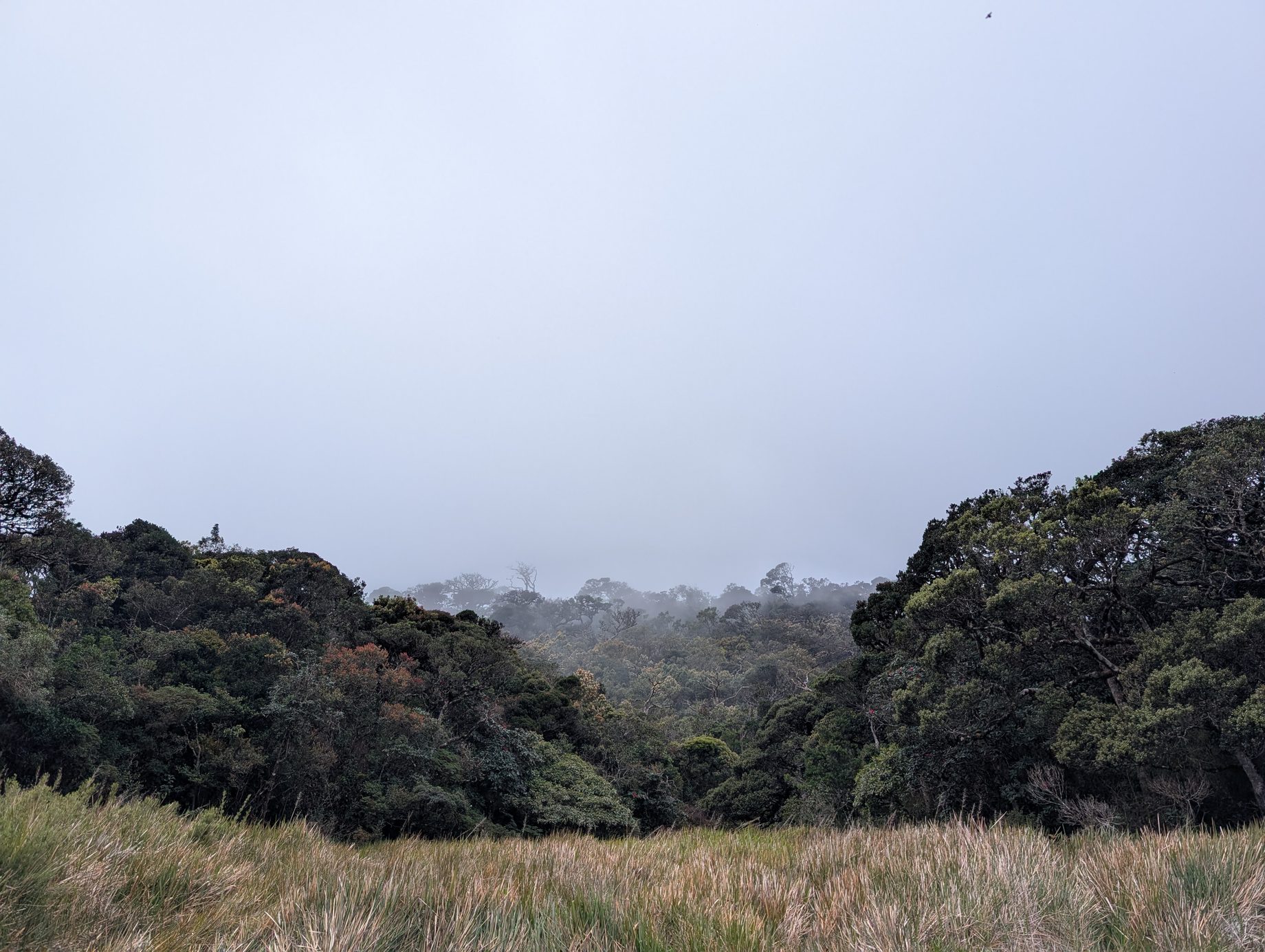
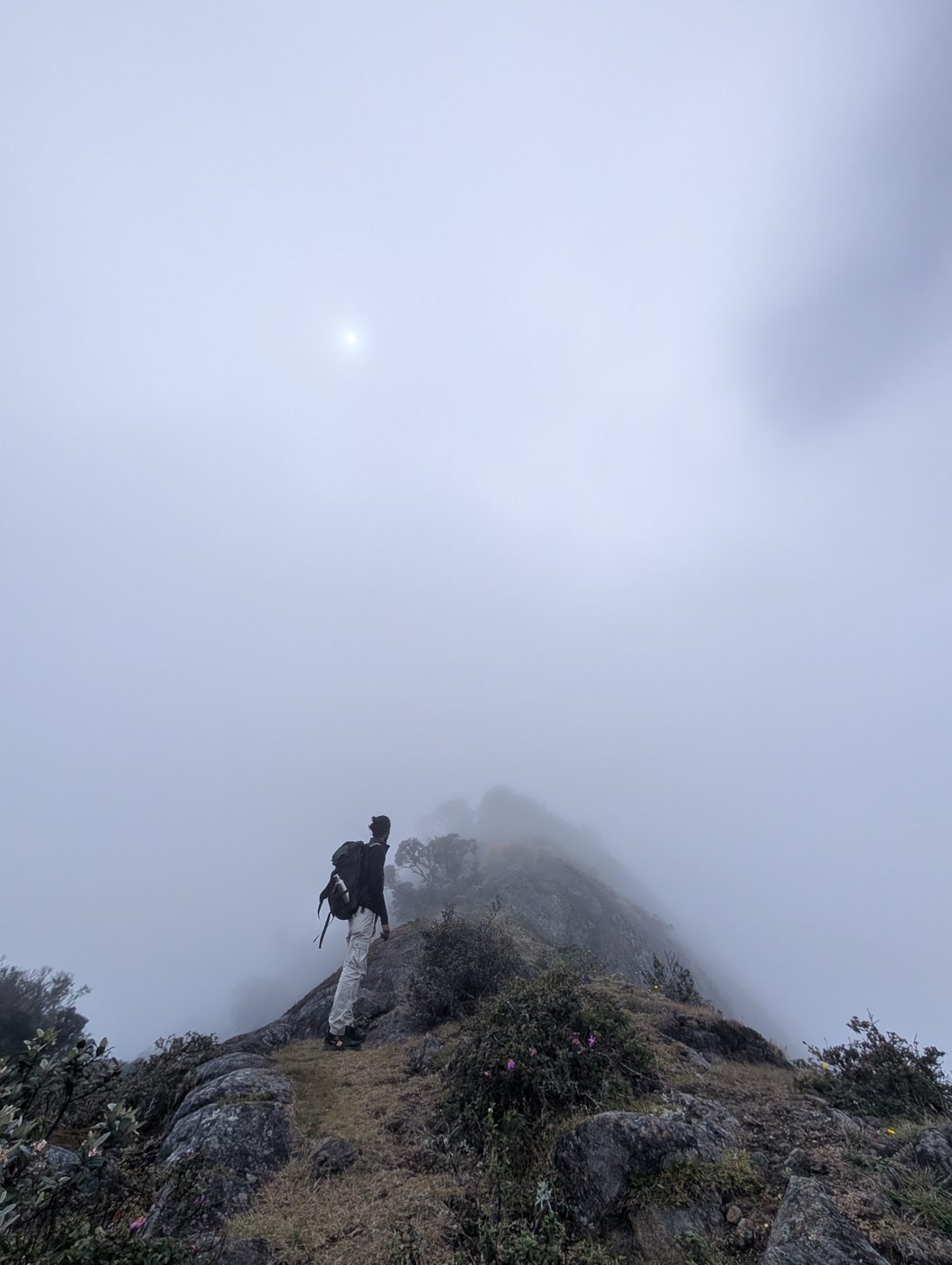
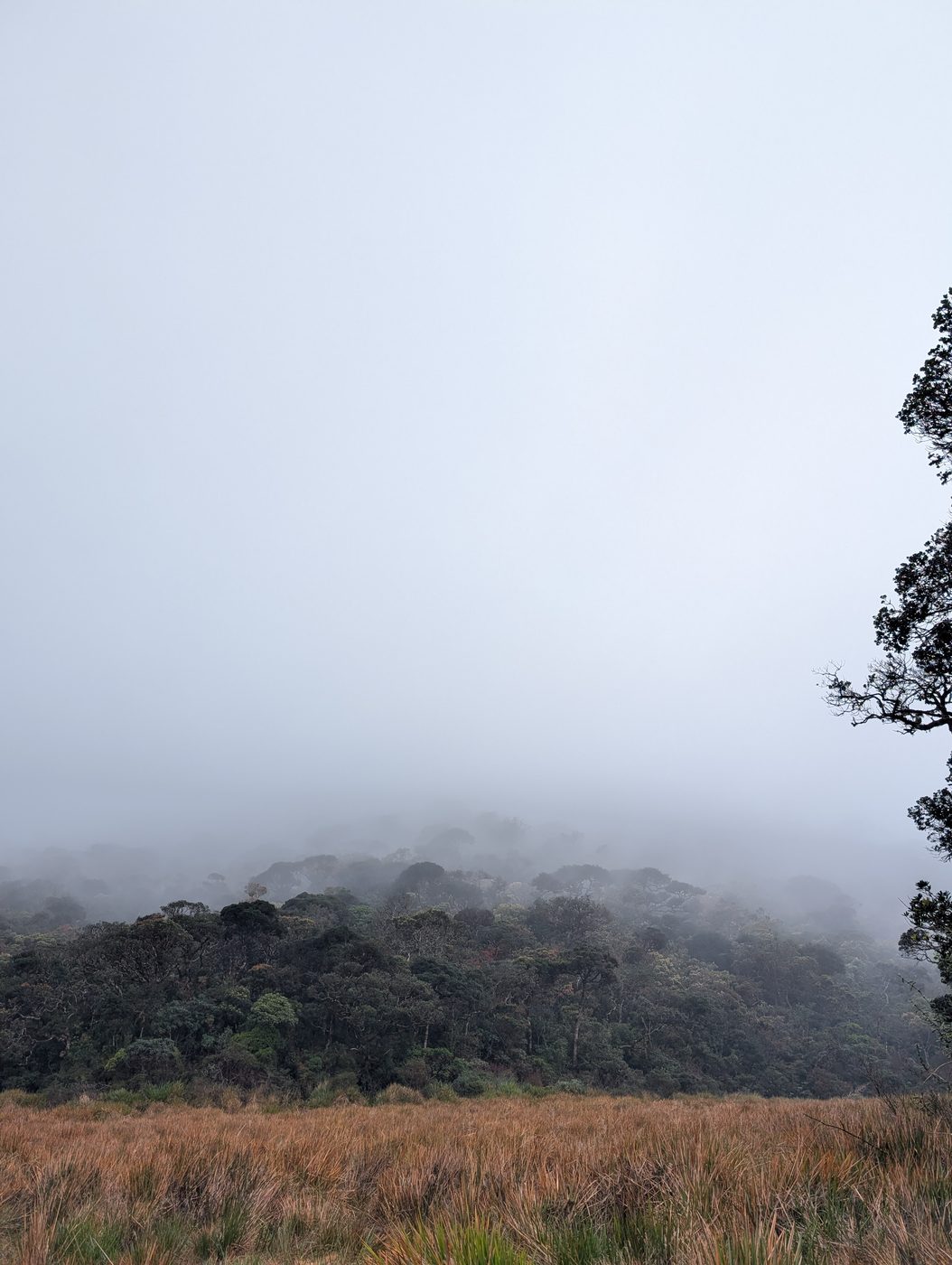
Horton Plains National Park, central highlands. The high tableland sits at roughly 2,100 metres and contains one of only two cloud forests on the island.
Horton Plains National Park sits at roughly 2,100 metres in Sri Lanka's central highlands, one of only two cloud forests on the island and a UNESCO World Heritage site. It receives about 180,000 visitors a year, of whom roughly 15% are foreigners. Around 80% of those foreign visitors travel from the town of Nuwara Eliya, which means a 90-minute drive each way in hired vans, tuks, and four-wheelers. On a peak-season day, somewhere near 150 individual vehicles enter the park.
The result is a cascade familiar to anyone who has driven up there in season. Diesel particulates settle on cloud-forest vegetation where moisture traps them against leaves. Engines idle at the entrance and the World's End car park. The 90-minute transfer is transactional and uninterpreted, even though it runs through the pastoral landscapes of Ambewela and the heritage railway station of Pattipola. Tourism spend largely bypasses the villages the route passes through.
This paper proposes one intervention and works through whether it adds up commercially, ecologically, and socially: a single shuttle service, four departures a day in peak season, with onboard naturalist guides and a structurally ring-fenced community fund. Not radical — a shuttle with a good guide. The argument is that the simplicity is the point, and that the unit economics make the rest possible.
What the paper argues
Replacing roughly 30% of individual vehicles with shuttles inside the park yields an estimated ~25% emissions reduction, even with diesel coaches at launch. Stop-start congestion and a heavy diesel mix mean 150 vehicles generate around 408 kg of CO₂ in the 30 minutes around the entrance alone.
The service breaks even at ~10% seat occupancy, roughly three of 22 seats per departure, or under 300 passengers a month. The low floor is what makes year-round operation, guide salaries, and community fund commitments structurally resilient.
Base-case Year 1 EBITDA of ~$264,000 at a 66.9% margin, scaling to over $550,000 in Year 2. The model is profitable across conservative, base, and optimistic scenarios, with full capital payback inside 18 months in each.
5% of net ticket revenue is ring-fenced for a community investment fund: 2.5% to social initiatives in Pattipola and Ambewela, 2.5% to invasive plant removal and restoration inside the park. About $17,000 in Year 1, scaling to nearly $30,000 by Year 3.
A phased pathway to zero emissions: diesel coaches with credible offsets in years 1–3, EV transition in years 3–5, fully electric and solar-charged by year 5+. The capital for the EV transition is funded from retained earnings, not new investment.
Total startup investment of under $205,000 for Phase 1, with two 22-seat Toyota Coasters, a booking platform, brand identity, and three months of working capital. Capital-light by design.
01
The problem
Concentrated emissions in a moisture-trapping forest, a forgettable transfer, and a route that takes tourism spend past the communities it touches.
The ecological case for Horton Plains is hard to overstate. The park is one of two cloud forests on the island and supplies water to three of Sri Lanka's major rivers, while quietly absorbing the cost of how visitors currently arrive.
What the place holds, and what arrives at its gate.
3,000 ha
Protected area
Montane forest, grasslands, and the headwaters of the Mahaweli, Kelani, and Walawe rivers.
52
Endemic birds
Bird species resident in the park, alongside 11 migrants.
77%
Endemic roadkill
Of observed roadkill in the park over a six-year study, around 77% were endemic species.
~150
Vehicles per peak day
Individual vehicles enter on a peak-season day. Predominantly diesel vans and SUVs.
Source: Horton Plains Shuttle Proposal, §2 and §3.1. Roadkill study cited in the white paper references.
What the park holds: the headwaters of three of Sri Lanka's major rivers, and one of only two cloud forests on the island.
Vehicles arrive almost entirely through one road. They idle at the entrance, along the access roads, and at the World's End viewpoint. Diesel particulate matter in a montane forest, where moisture hangs against vegetation, has a disproportionate impact compared to lowland environments. Engine noise disturbs the more noise-sensitive species, the sambar deer included.
Replacing roughly 30% of individual vehicles cuts emissions at the park entrance by ~25%, even with diesel coaches at launch.
Today
408 kg
CO₂ in 30 minutes around the entrance, from ~150 vehicles in stop-start congestion.
With shuttle (30% replacement)
~308 kg
In the same period, after 30% of individual vehicles are replaced with shuttles. Net of shuttle emissions.
−25% CO₂ at the entrance
Source: Horton Plains Shuttle Proposal, §3.2. Emissions methodology from CIMB GHG calculation guidance and the IPCC 2006 Inventory Task Force.
The visitor experience
The current experience begins with a transactional negotiation through a hotel or local driver. A round trip from Nuwara Eliya costs roughly LKR 8,000 (~$25) in a tuk or LKR 10,000–12,000 (~$32–$39) in an older van. Several of the vehicles that make this run are cramped and poorly maintained, which on a hilly 90-minute route matters. There is usually no interpretation during the drive, no ecological context-setting, no narration of Ambewela's pastoral landscapes or the heritage Pattipola station the road passes. Visitors arrive at a car park and figure it out.
The community dimension
The villages between Nuwara Eliya and the park entrance — Pattipola and Ambewela in particular — derive limited structured benefit from the tourism that passes through them daily. The economic value of Horton Plains tourism bypasses these communities rather than circulating within them.
02
The shuttle
A return ticket at $35. Four departures daily in peak season, three in low season. Year-round operation, with an onboard naturalist who turns the 90-minute transfer into the opening chapter of the experience.
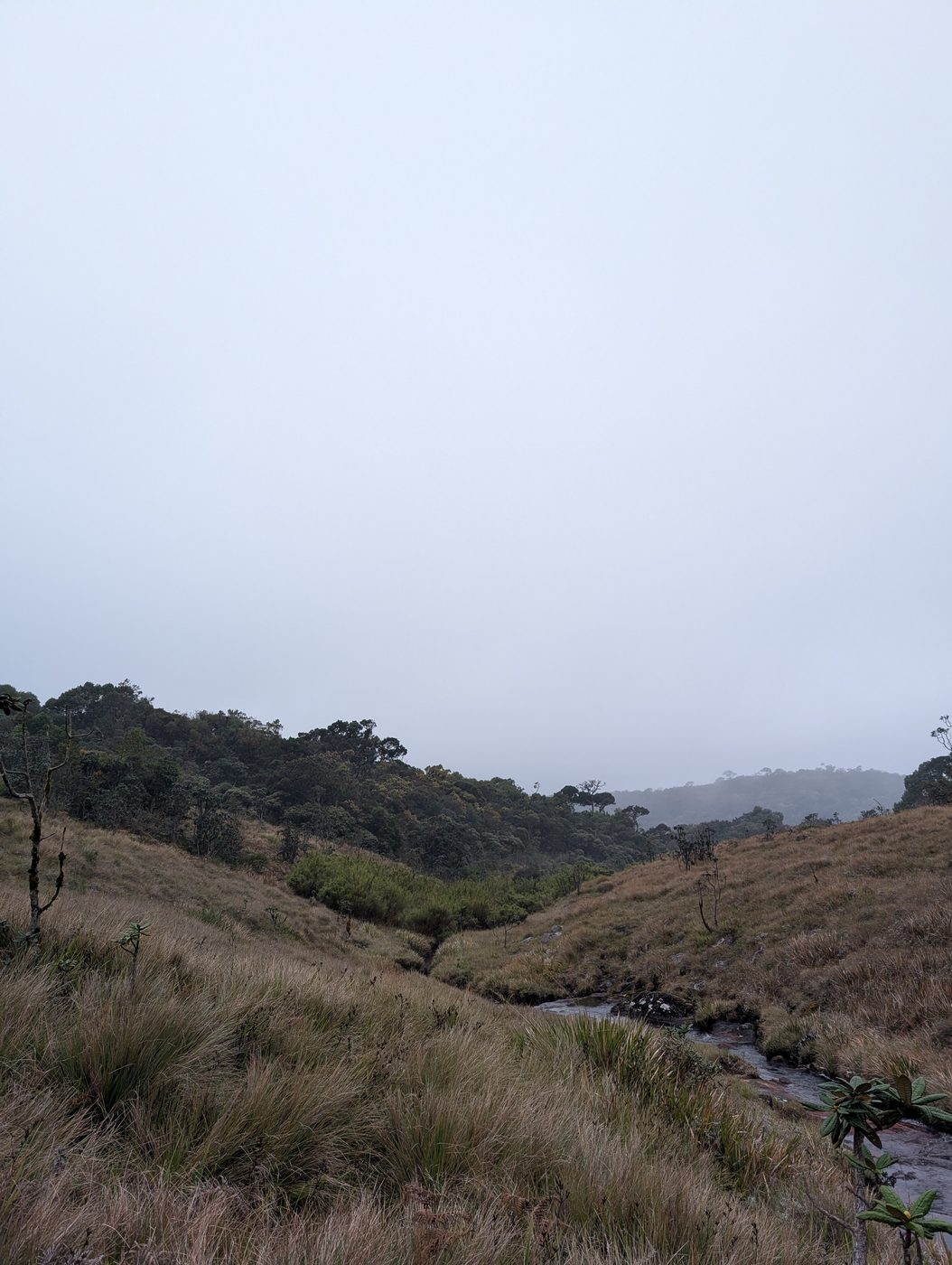
The country a shuttle ride opens into. Currently, most visitors arrive at a car park, walk the loop, and figure it out.
The proposal is a daily, year-round shuttle service connecting Nuwara Eliya to the park. A return ticket priced at $35 is targeted at eco-conscious mid- to high-end travellers. Each departure carries an onboard naturalist who provides ecological interpretation during the journey, with a designated photography stop en route.
What every shuttle includes.
01
Onboard naturalist
Recruited from Pattipola, Ambewela, and Nuwara Eliya. Paid well by design, first-aid certified, and trained as emergency drivers.
02
Photography stop
A designated stop en route, built into every departure for a working highland landscape view.
03
Multilingual via QR
Digital guides covering the same interpretation in Mandarin, Japanese, French, German, and Hindi, for non-English-speaking visitors.
04
Ancillaries
Tea, coffee, meal packs, and a trail supplement pack available at modest add-on pricing. Optional, not bundled.
05
Hotel pickups
Three Nuwara Eliya hotels in the pickup loop. Reflects how mid- to high-end travellers actually move at dawn.
06
Returns only
Tickets are sold as returns. Simplifies operations, guarantees the return leg, and reflects the absence of alternative transport from the park.
Source: Horton Plains Shuttle Proposal, §4.1 to §4.4.
Five stops over 90 minutes. The route runs from a central Nuwara Eliya pickup point through Ambewela and Pattipola, with a photography stop en route.
Source: Horton Plains Shuttle Proposal, §3.5. Peak season is December–March plus August; schedule runs four daily departures, with the first at 4:15 AM for dawn at World's End.
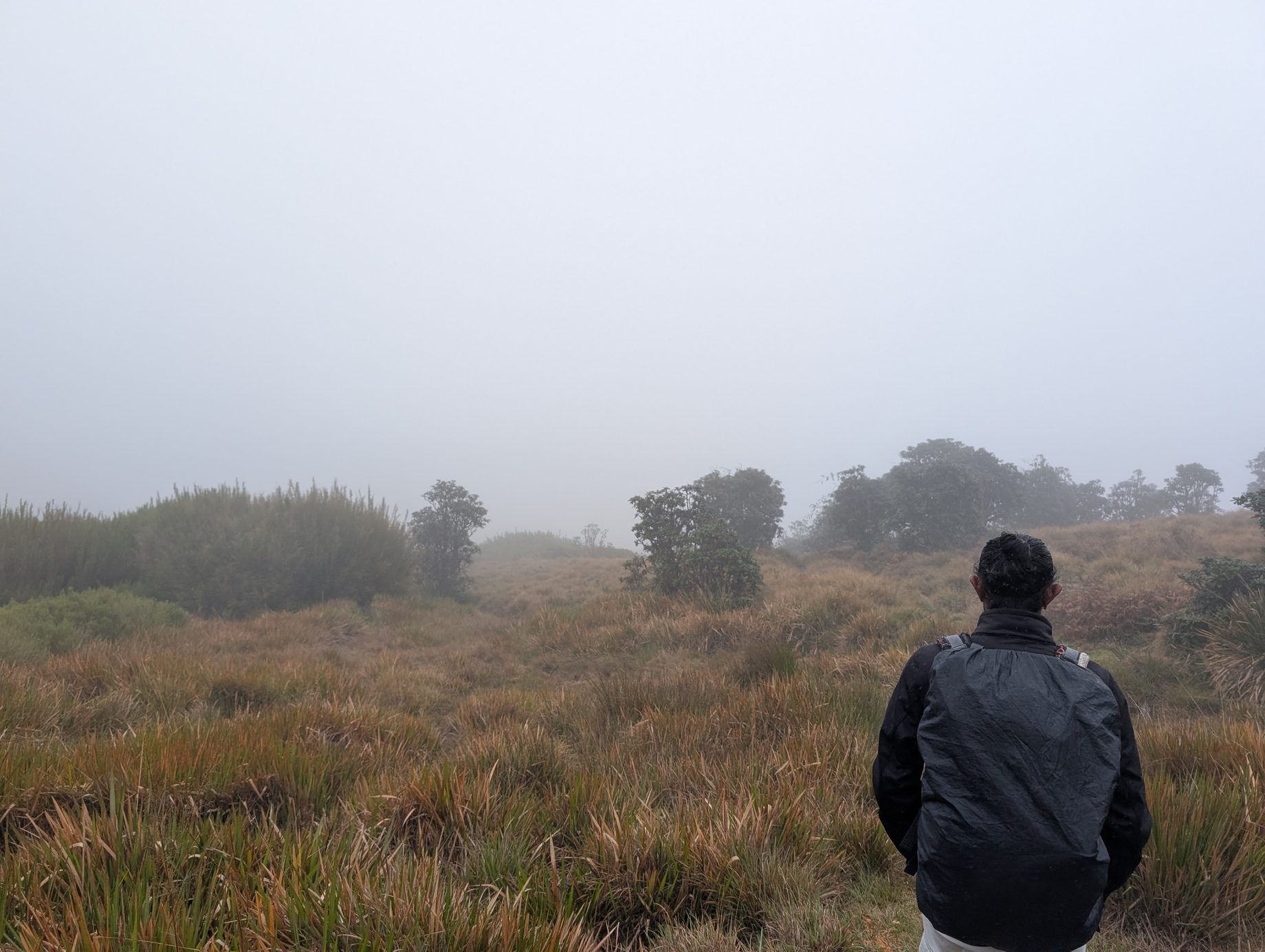
The country and the moments in it. A summit reached, grasslands held in mist. The shuttle ride is the opening chapter of this experience.
The naturalist is central to whether this works. A 90-minute transfer with no interpretation is what currently exists. The same transfer with someone who knows the cloud forest, the endemic species, and the conservation story is a different product entirely.
The community fund
5% of net ticket revenue is ring-fenced for a community investment fund, governed transparently with community input on allocation. Ornamental plants introduced during the British colonial period have become invasive across the grasslands, displacing native flora and increasing fire risk. Every ticket sold funds, in small part, the slow undoing of that damage.
The fund splits evenly. Half goes to the people along the route. Half goes to the park itself.
2.5%
Community initiatives
School and healthcare infrastructure in Pattipola and Ambewela
Environmental education programmes for local schools
Support for sustainable farming in the buffer zone
2.5%
Park restoration
Invasive plant removal across the grasslands
Native flora recovery in cleared areas
Fire risk reduction along the high-pressure zones
Source: Horton Plains Shuttle Proposal, §4.4. 5% is on net ticket revenue, after taxes and direct commissions.
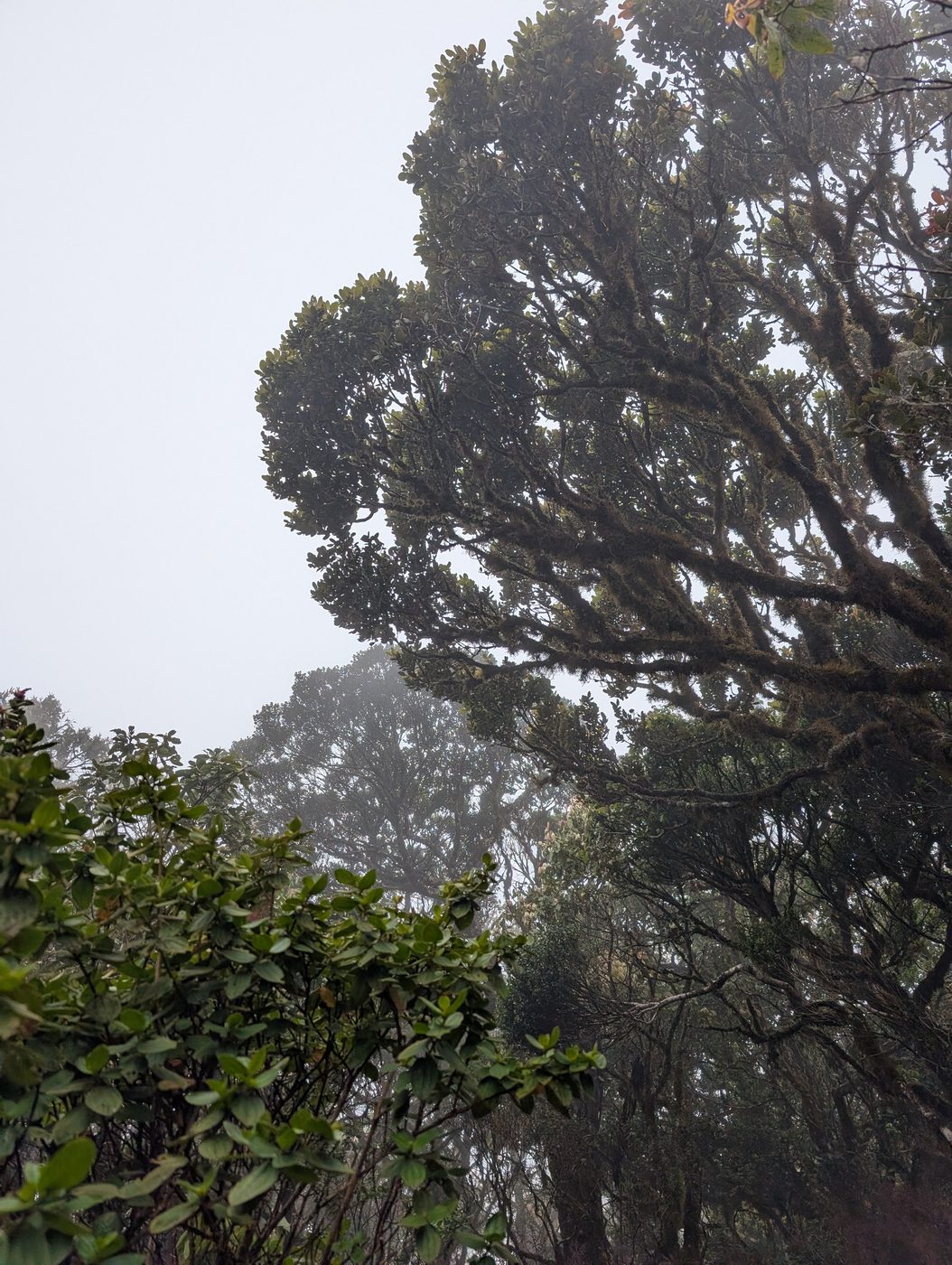
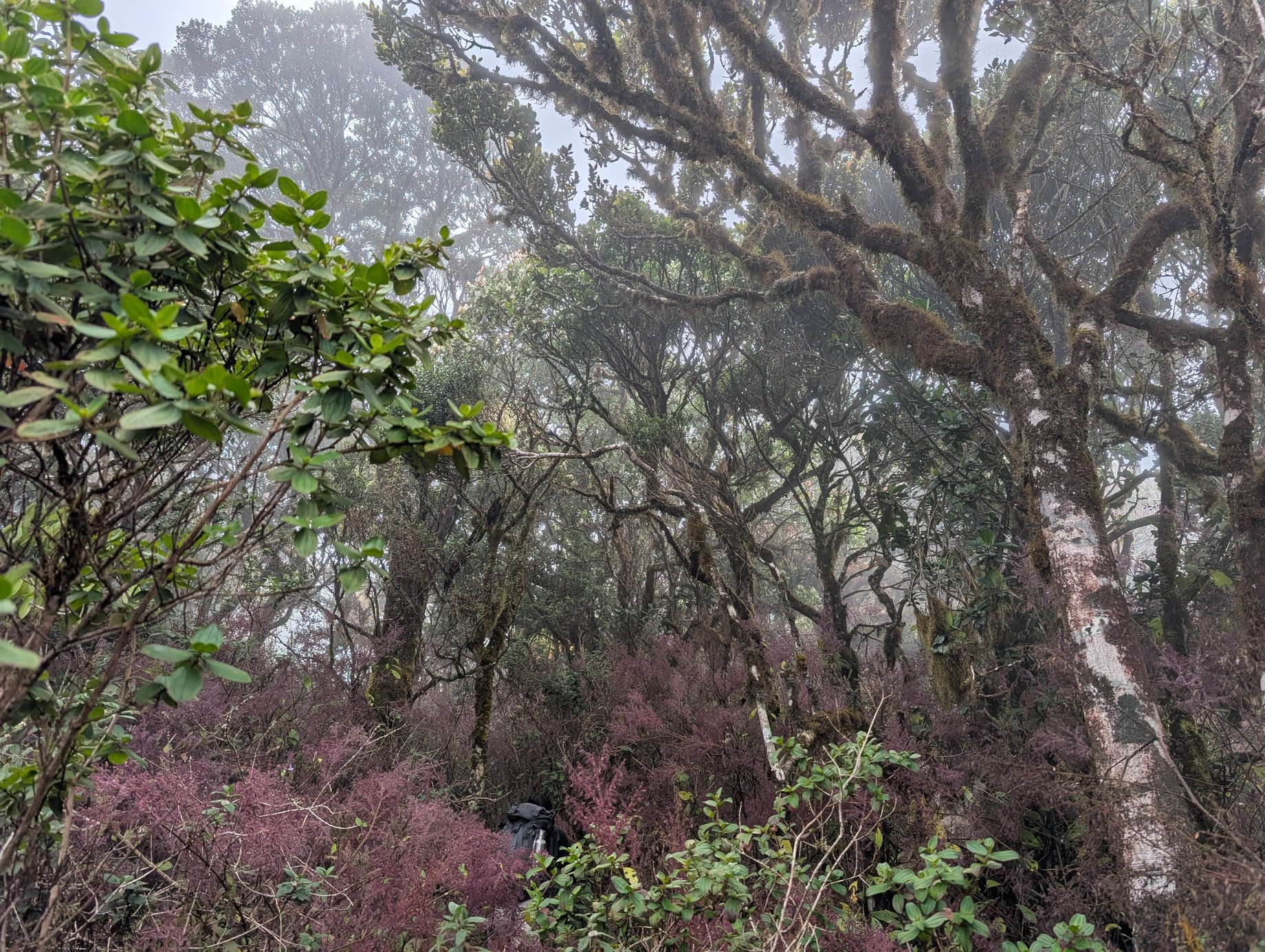
The cloud-forest understory in the higher elevations of the park. Flowering shrubs, moss-laden trees, and the layered detail that a 90-minute guided ride exists to put into context.
A capital-light business under $205,000 to start. Profitable across three modelled scenarios. Break-even at ~10% occupancy is the structural cushion that makes the rest of the model possible.
The base case assumes a weighted-average occupancy of 27.3% in Year 1, ramping from a slow first quarter, with 65% of bookings direct and 35% through partner hotels and restaurants at a 15% commission. At those numbers, the service generates an EBITDA of $264,000 in Year 1 at a 66.9% margin, scaling above $550,000 in Year 2 as occupancy normalises.
The structural advantage is currency. Revenue is effectively USD-denominated, costs are LKR-denominated. The model holds well at the current rate of approximately LKR 310 per USD. A rupee appreciation to LKR 250 per USD would increase USD-equivalent operating costs by roughly 20%; the business remains profitable through that scenario.
Three scenarios. Profitable across all three. Payback inside 18 months in each.
Year 1
Conservative
Base case
Optimistic
Avg. occupancy
21.5%
27.3%
31.6%
Ticket price
$30
$35
$45
Annual passengers
9,483
12,026
13,923
Net revenue
$273,006
$394,499
$568,524
Year 1 EBITDA
$148,003
$264,019
$429,790
EBITDA margin
54.2%
66.9%
75.6%
Source: Horton Plains Shuttle Proposal, §5.7. Conservative scenario assumes slow uptake, poor weather, and limited hotel buy-in.
The single most important number in the model is the break-even occupancy of approximately 10%. The service needs to consistently fill fewer than three of its 22 seats per departure to operate at a loss. That floor is what allows the business to maintain year-round operation, premium guide salaries, and full community fund commitments through demand fluctuations, soft seasons, and external shocks.
Break-even at ~10% · 3 of 22 seats per departure
A full financial model, covering three scenarios, monthly cash flow, and sensitivity analysis on ticket price, occupancy, fuel, and exchange rate, supports the numbers above and is available on request.
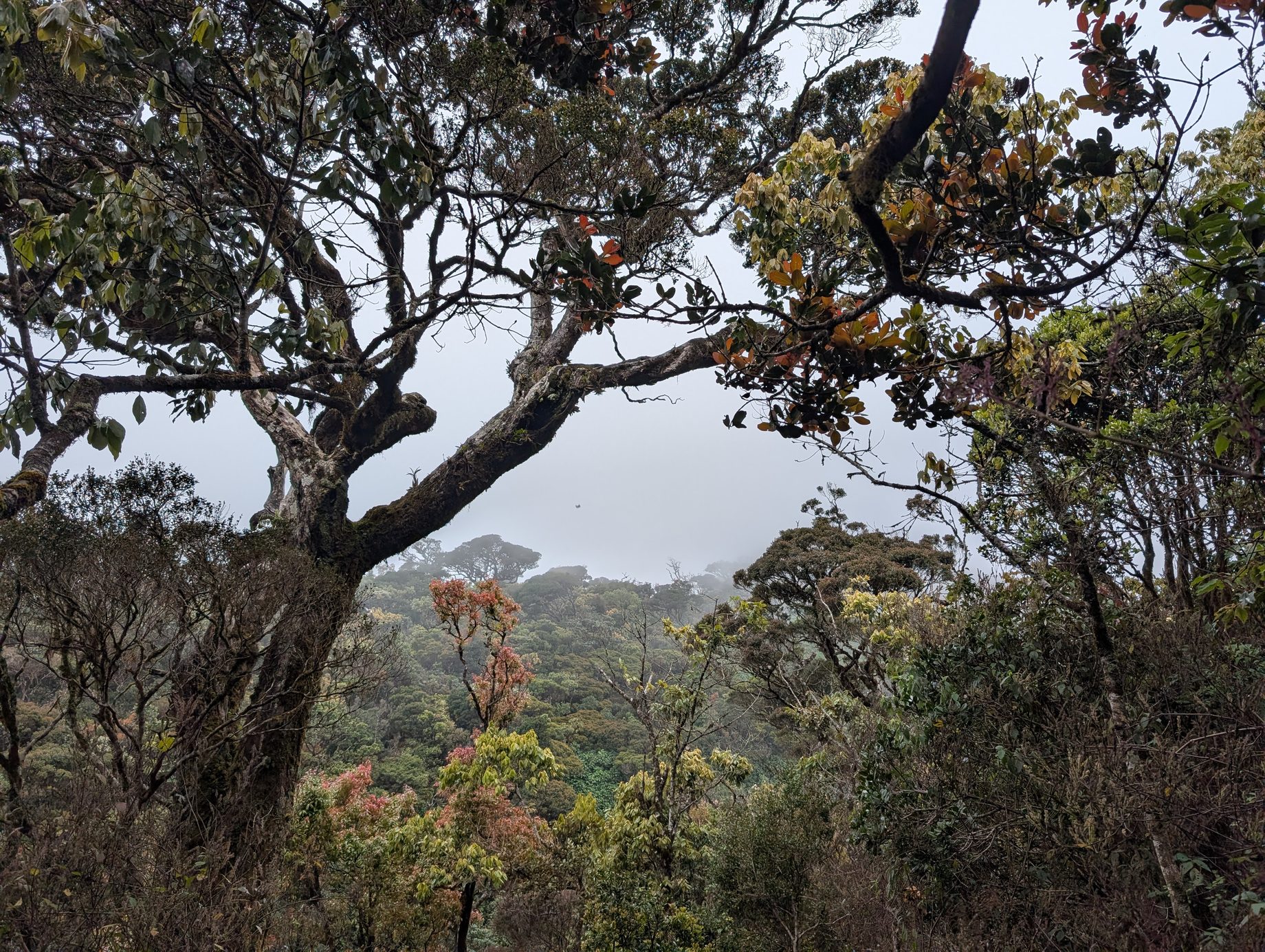
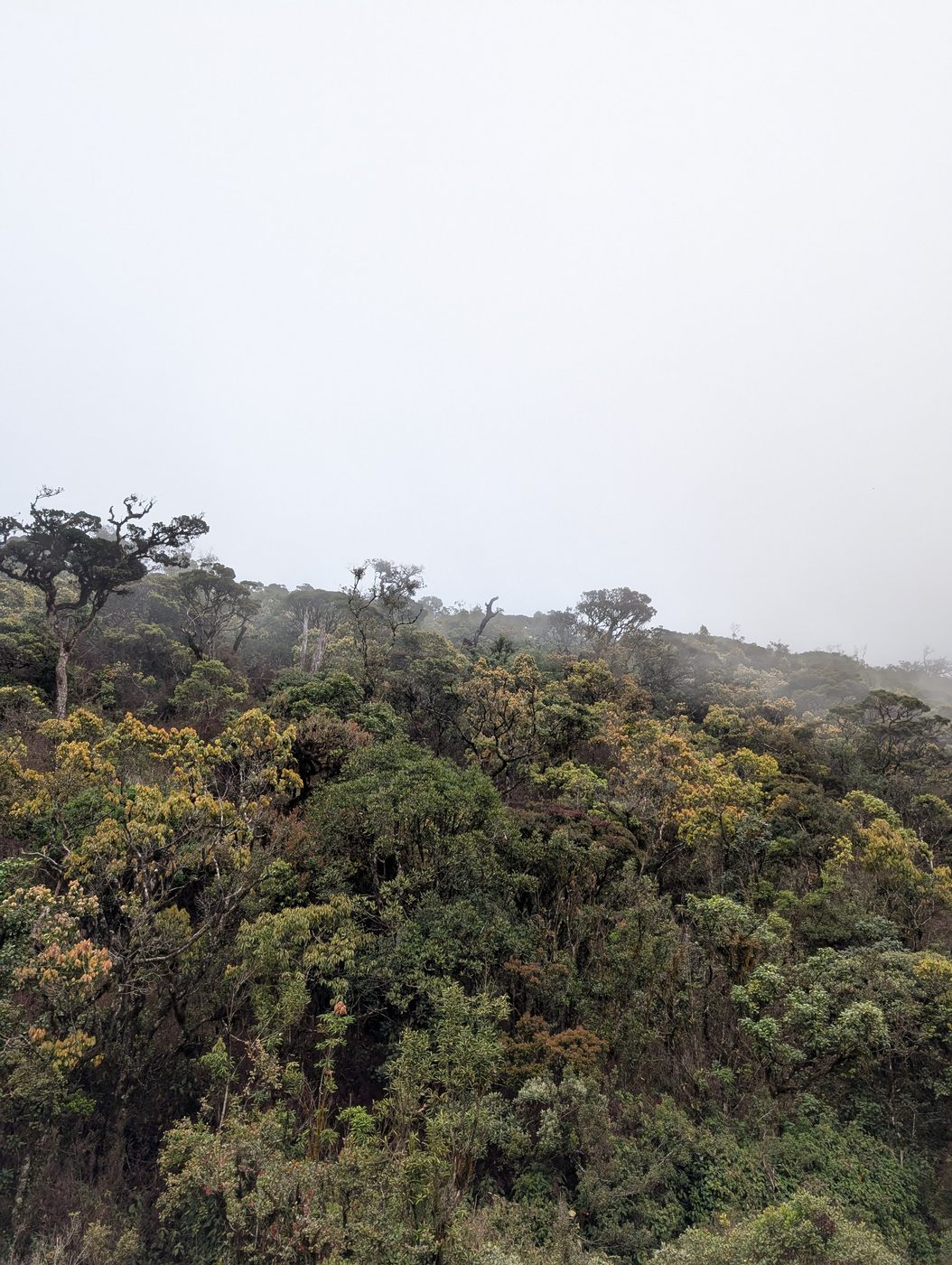
The cloud forest the financial case ultimately serves. The business exists so this stays here in a hundred years.
Three phases. Diesel with credible offsets at launch, EV transition as the infrastructure matures, fully electric and solar-charged by Year 5+. The EV transition is funded from retained earnings, not new capital.
Claiming carbon neutrality from launch would not be credible. Sri Lanka's EV charging infrastructure is still thin, and right-hand-drive electric minibus availability in South Asian markets is narrow. The pathway treats this honestly.
The phased pathway. Each phase funds the next.
Phase 01
Years 1–3
Diesel + offsets
Launch with two Toyota Coasters serviceable in-country. Annual carbon emissions calculated and offset through a credible local programme, ideally reforestation or buffer-zone ecosystem restoration. The evidence base — vehicle reduction data, emissions savings, fund impact — is built here.
Phase 02
Years 3–5
EV transition
Expand the experience into private guided treks alongside the shuttle. Begin the EV transition as right-hand-drive electric minibus availability in South Asia widens. Any addition to the fleet from this point is electric.
Phase 03
Year 5+
Carbon zero
100% electric fleet charged from solar infrastructure in Nuwara Eliya. Zero tailpipe emissions on the full hotel-to-park-and-back journey. The capital for the transition comes from Phase 1–2 cash flows, not new investment.
A morning walk on the plains, in weather typical of the high country. The proposal exists so visits like this remain possible, and so the place is still here in a hundred years.
More than a business plan, this paper presents a model for how tourism infrastructure can be redesigned to protect the places it depends on.
The full paper
The paper, and the deck it was distilled into
The white paper carries the full argument with sourced references and detailed numbers. The proposal deck is the 10-slide version used in conversation with operators, partners, and conservation contacts. Both are free to download, share, and quote.
01
PDF · 30 pages · ~7.5 MB
Sustainable Access to Horton Plains National Park
The full white paper. Sets out the ecological, experiential, and community case, walks through the operating model and financials, lists references. March 2026.
The 10-slide distillation. Same argument as the white paper, condensed for a 15-minute conversation with operators, hoteliers, conservation partners, or anyone curious. April 2026.
A detailed financial model, covering three scenarios, monthly cash flow, and sensitivity analysis, supports the numbers in the paper and is available on request. Reach Dilanke at dilanke.panagoda@gmail.com.
About this paper
This is a hobby project by two friends who happen to think and work analytically about Sri Lanka's tourism sector — not a commissioned consulting deliverable, not a pitch deck, not affiliated with either of our employers. We wrote it because the cascade of problems at Horton Plains has a reasonably clean solution, and the model held up under our own scrutiny.
The financials reflect base-case assumptions we believe are defensible, with conservative and optimistic scenarios tested alongside. Treat the document as a proposal for someone to take and run with, not as authoritative analysis. Comments, corrections, and challenges are genuinely welcome. If you're someone who could implement this, please get in touch.
About the authors
Dilanke Panagoda
Co-author · Tourism & data
Has worked across Sri Lanka's travel and hospitality industry for over thirteen years — first planning luxury experiential trips, then as a safari guide in Yala, then as a founding member of travel startup Pepper. Later led an analytics team at Grant Thornton Stax, a management consulting and private equity advisory firm. Currently Head of Product & Marketing at The Fabulous Getaway. Holds CIMA qualifications and an MBA in International Business.
Currently Head of Delivery at Grant Thornton Stax's Colombo office, with over 15 years of experience providing data-driven, actionable insights to global and local investors. Her earlier roles in non-profit and socially focused organisations shaped the conviction that businesses last only when they design for long-term sustainability and genuine community welfare. She is also a Director at Stages Theatre Group and recently completed an MA in English Studies at the University of Colombo.
A short list. The full reference set is in the paper itself.
Karunarathna, S., Ranwala, S., Surasinghe, T., & Madawala, M. (2017). Impact of vehicular traffic on vertebrate fauna in Horton Plains and Yala national parks of Sri Lanka. Journal of Threatened Taxa, 9(3), 9928. doi.org/10.11609/jott.2715.9.3.9928-9939
Rathnayake, R. M. W., & Gunawardena, U. A. P. D. (2014). Visitor characteristics and perceptions: a case of Horton Plains National Park in Sri Lanka. Kelaniya Journal of Management, 1(1), 81–100.
Sri Lanka Tourism Development Authority. (2026). Year in Review: January to June 2025.sltda.gov.lk
Aronson, J., & Aronson, T. (2015). Tale of two highlands part I: Horton Plains, Sri Lanka. Natural History of Ecological Restoration.
IPCC. (2019). Task Force on National Greenhouse Gas Inventories.ipcc-nggip.iges.or.jp